Product reveal watch
[Task] Create a 24-second premium product reveal of an original smartwatch, the "Vessel One" by the fictional maker Halden, at 1920x1080, 30 fps.
More
1 test · 1 finished runs (1 agent, 0 raw one-shot) · 1 video
The prompt
[Task] Create a 24-second premium product reveal of an original smartwatch, the "Vessel One" by the fictional maker Halden, at 1920x1080, 30 fps. [Scenes] 1. 0-4 s: Total darkness. A thin rim light sweeps left to right and reveals only the bevelled edge of a round watch case in silhouette. Fine dust motes drift through the beam. 2. 4-9 s: The camera slowly orbits about 35 degrees of yaw. A softbox light rakes across the brushed titanium case, the sapphire crystal throws a travelling specular streak, and the knurled crown turns a quarter rotation. 3. 9-15 s: Exploded view. The watch lifts and separates vertically into six layers: crystal, OLED display, haptic ring, logic board, battery and ceramic sensor back. The layers spread on staggered springs, and thin leader lines draw out to tracked uppercase labels. 4. 15-19 s: The layers re-stack with a soft click-settle. The display wakes with a radial dial animation. Three callouts slide in with counting numerals: "14-DAY BATTERY", "2.1 MM SAPPHIRE" and "HEART · SPO2 · SKIN TEMP". 5. 19-24 s: Hero shot. The camera pulls back to a front three-quarter view of the watch on a mirrored plinth. A final light sweep crosses the case, the wordmark "VESSEL ONE" letter-spaces in, and the tagline "Time, held closer." fades up beneath it. [Style] Palette: #07080A near-black, #1C1F24 graphite, #B9BEC6 titanium, #E8C27A warm gold accent, #5FD3C6 display teal. Use a wide geometric sans, light weight for labels and heavy tracking for the wordmark. Brushed metal is built from fine seeded linear striations under layered gradients, and specular highlights are moving gradient masks. Lighting is low-key studio with deep falloff. Motion: slow exponential ease-out for the camera, critically damped springs for the layers, and a 60 ms stagger on labels and callouts. [Wow] - The specular streak on the crystal and the case highlights respond to camera angle, so the light visibly slides as the camera orbits. - The exploded view has true depth sorting, per-layer parallax and soft contact shadows between layers. - The dial is live: a sweeping second hand, a ticking date ring and a pulsing heart-rate complication. - The volumetric light beam in scene 1 carries drifting, softly lit particles. - The mirrored plinth reflects every motion with a blurred, fading reflection. [Rules] - Every frame is drawn in code (SVG, canvas, CSS or WebGL). No image files, no image generation, no external assets beyond fonts. - Deterministic: no unseeded randomness at render time. - Text must be crisp, spelled correctly and readable at 1080p. - No hard cuts between scenes: every change is a designed transition. - The watch must read as the same object in every scene: identical proportions, materials and dial design. - No real brands or logos; use only the Halden and Vessel One names. [Harness notes] Render the final video to out.mp4 (1920x1080, 24 s). Write everything into the working directory. HyperFrames 0.8.70 is already installed for you in the current directory: node_modules is pre-installed and read-only, so do not run npm install or npx --yes; use the local hyperframes command (for example hyperframes init <dir> --example blank, then hyperframes render). Render the final video yourself to out.mp4 in the current directory. You may take snapshots and inspect your own output (headless chromium is available at /usr/bin/chromium) and iterate on your own before finishing.
Same prompt, all models: step through 1 runsIn the gallery: one player, arrow keys or swipe.
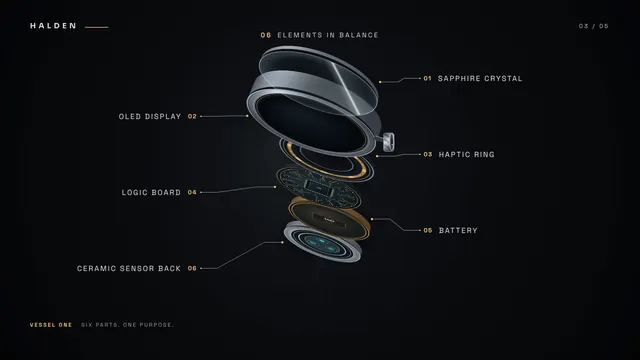 Rendered video
GPT-6 Sol
Codex CLI 0.156.1
skills on · Codex CLI 0.156.1 + Remotion/HyperFrames skills
Rendered video from the run