Terminal hacker boot
[Task] Create a 25-second motion-graphics video at 1920x1080, 30 fps, of a retro CRT terminal that cold-boots a fictional operating system and transforms int…
More
1 test · 2 finished runs (2 agent, 0 raw one-shot) · 2 videos
The prompt
[Task] Create a 25-second motion-graphics video at 1920x1080, 30 fps, of a retro CRT terminal that cold-boots a fictional operating system and transforms into a live system-monitoring dashboard. [Scenes] 1. 0-4 s: Black screen. The CRT powers on: a bright horizontal line expands vertically into a phosphor glow. Firmware text appears: "HALCYON FIRMWARE v3.1", then a memory counter ticks up to 65536K OK. 2. 4-9 s: A cursor types commands at a human pace with small timing variations: "> mount /core", "> init --profile=night", "> net up eth0". Each command is followed by status lines that end in green [ OK ], plus one yellow [ WARN ] ("fan2: rpm low"). 3. 9-13 s: A large ASCII-art "HALCYON" logo assembles character by character from scattered glyphs that fall into place. Three progress bars, drawn with block characters, fill underneath it. 4. 13-18 s: The log scroll accelerates into a blur of lines. The screen splits along box-drawing borders into panels while the camera eases back slightly, revealing the curved bezel. 5. 18-25 s: A live dashboard runs with sparklines for CPU, service tables, gauges and a scrolling event log. A final prompt with a blinking cursor holds for the last 2 s. [Style] Palette: CRT black #050806, phosphor green #39FF7A, amber #FFB000, warning red #FF4D4D, dim green #1C5E35. Type: a monospaced font only, with box-drawing characters for all chrome. Lighting: bloom on bright glyphs, scanlines, slight barrel distortion, vignette and faint phosphor persistence trails. Motion: typed text runs on a character clock, panels slide with snappy expo easing, and nothing bounces. [Data] Services (name / CPU % / memory MB / status): auth 12 / 210 / UP; relay 47 / 880 / UP; archive 8 / 1420 / UP; scheduler 23 / 340 / UP; mailer 71 / 512 / DEGRADED. CPU history (12 samples): 18, 22, 35, 31, 44, 58, 52, 61, 49, 55, 63, 57. Network: in 482 KB/s, out 131 KB/s. Uptime: 00:00:21. Load: 0.82 1.04 0.97. Log lines: "relay: handshake 10.4.0.12 accepted", "archive: index rebuilt (3,204 files)", "mailer: queue depth 41", "auth: token refresh ok". [Wow] - Authentic CRT rendering: chromatic fringe, rolling refresh band and glow that intensifies with text density. - The ASCII logo forms from a deterministic glyph-particle simulation. - The terminal splits into panels as a choreographed reflow, not a cut. - The dashboard values animate continuously, and the mailer row pulses amber. [Rules] - Every frame is drawn in code (SVG, canvas, CSS or WebGL). No image files, no image generation, no external assets beyond fonts. - Deterministic: no unseeded randomness at render time. - Text must be crisp, spelled correctly and readable at 1080p. - No hard cuts between scenes: every change is a designed transition. - All text, including the dashboard, uses a single monospaced font aligned to a character grid. [Harness notes] Render the final video to out.mp4 (1920x1080, 25 s). Write everything into the working directory. HyperFrames 0.8.70 is already installed for you in the current directory: node_modules is pre-installed and read-only, so do not run npm install or npx --yes; use the local hyperframes command (for example hyperframes init <dir> --example blank, then hyperframes render). Render the final video yourself to out.mp4 in the current directory. You may take snapshots and inspect your own output (headless chromium is available at /usr/bin/chromium) and iterate on your own before finishing.
Same prompt, all models: step through 2 runsIn the gallery: one player, arrow keys or swipe.
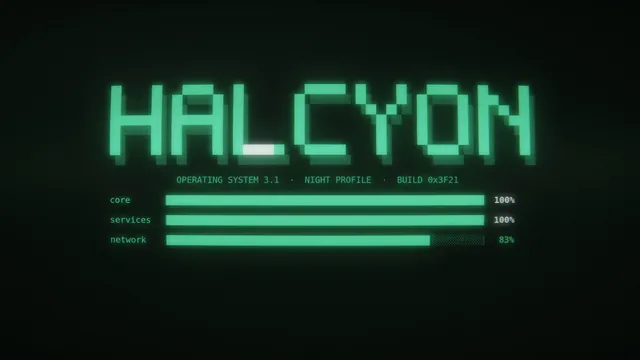 Rendered video
Claude Opus 5.5
Claude Code 2.1.280
skills on · Claude Code 2.1.280 + Remotion/HyperFrames skills
Rendered video from the run
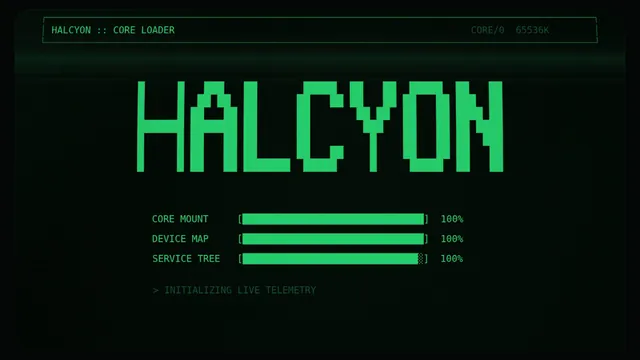 Rendered video
GPT-6 Sol
Codex CLI 0.156.1
skills on · Codex CLI 0.156.1 + Remotion/HyperFrames skills
Rendered video from the run