Galaxy collision
[Task] Create a 25-second, 1920x1080, 30 fps cinematic simulation of two spiral galaxies colliding over 1.2 billion years.
More
1 test · 2 finished runs (2 agent, 0 raw one-shot) · 2 videos
The prompt
[Task] Create a 25-second, 1920x1080, 30 fps cinematic simulation of two spiral galaxies colliding over 1.2 billion years. It ends with the merged elliptical galaxy and runs a time counter throughout. [Scenes] 1. 0-4 s: Deep black field with faint background stars. Two spiral galaxies rotate as they approach on a curved path: Aurel, large and blue-white, and Nym, smaller and amber. The camera slowly pushes in, and the counter reads "0 Myr". 2. 4-9 s: First pass. The disks interpenetrate and a luminous tidal bridge forms. The camera orbits 30 degrees around the pair to show depth. 3. 9-14 s: The galaxies separate to maximum distance. Two long tidal tails sweep out in arcs, and pink starburst knots ignite along them. The camera tracks one tail. 4. 14-19 s: Second infall. The cores spiral together and dust lanes twist. A brief bright flare marks core coalescence. 5. 19-25 s: The stars relax into a smooth, glowing elliptical galaxy with faint shells. The camera pulls back to a wide frame. Title: "AUREL-NYM, 1.2 BILLION YEARS". [Style] Palette: void #05060B, young stars #9CC8FF, old stars #FFC27A, starburst #FF5FA2, dust #3B2A24, label #E8ECF5. Use a thin, wide-tracked sans for labels and tabular numerals for the counter. Stars are additive points with bloom, and dust is dark absorbing wisps. The camera moves on slow ease-in-out curves, and labels fade and slide 12 px. [Data] Aurel: 18,000 particles, mass 2.0. Nym: 9,000 particles, mass 1.0. Orbit: prograde. Milestones (time, label): - 0 Myr: Approach - 250 Myr: First pass - 520 Myr: Maximum separation - 780 Myr: Second infall - 1,000 Myr: Core coalescence - 1,200 Myr: Relaxed elliptical [Wow] - Star motion comes from a seeded, precomputed restricted N-body integration, so the tails emerge physically rather than being keyframed. - The 3D particle field supports parallax during the camera orbit, with depth-sorted dust that occludes stars. - Particle colour shifts from blue to amber as the population ages, and starburst knots flash at the bridge. - The time counter accelerates nonlinearly, and a thin timeline at the bottom pops each milestone label on. - A soft lens bloom pulses at core coalescence. [Rules] - Every frame is drawn in code (SVG, canvas, CSS or WebGL). No image files, no image generation, no external assets beyond fonts. - Deterministic: no unseeded randomness at render time. - Text must be crisp, spelled correctly and readable at 1080p. - No hard cuts between scenes: every change is a designed transition. - The time counter only moves forward and matches the milestone times. [Harness notes] Render the final video to out.mp4 (1920x1080, 25 s). Write everything into the working directory. Remotion 4.0.527 is already installed for you in the current directory: node_modules is pre-installed and read-only, so do not run npm install or create-video, and a remotion.config.ts here already points rendering at the local Chromium. Render the final video yourself to out.mp4 in the current directory (for example npx remotion render <entry file> <composition id> out.mp4). You may render stills or frames and inspect your own output (headless chromium is available at /usr/bin/chromium) and iterate on your own before finishing.
Same prompt, all models: step through 2 runsIn the gallery: one player, arrow keys or swipe.
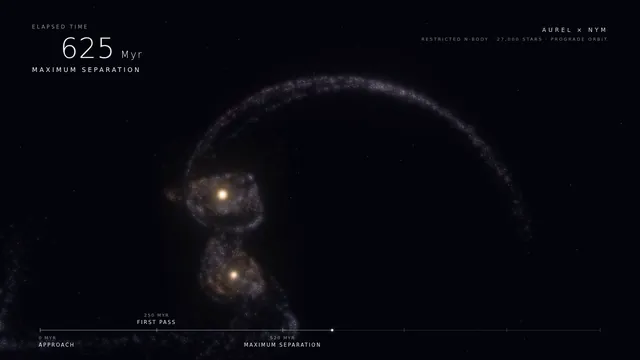 Rendered video
Claude Opus 5.5
Claude Code 2.1.280
skills on · Claude Code 2.1.280 + Remotion/HyperFrames skills
Rendered video from the run
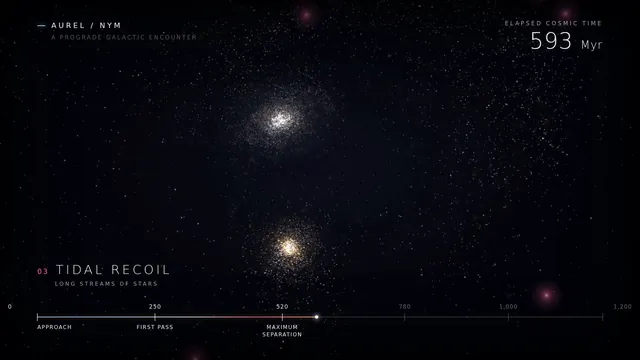 Rendered video
GPT-6 Sol
Codex CLI 0.156.1
skills on · Codex CLI 0.156.1 + Remotion/HyperFrames skills
Rendered video from the run