Music visualizer synthwave
[Task] Create a 24-second synthwave music visualiser at 1920x1080, 30 fps.
More
1 test · 2 finished runs (2 agent, 0 raw one-shot) · 2 videos
The prompt
[Task] Create a 24-second synthwave music visualiser at 1920x1080, 30 fps. It plays an original 120 BPM soundtrack synthesised entirely in code, and every visual is locked to the same beat grid: one beat = 0.5 s = 15 frames, and one bar = 4 beats. [Scenes] 1. 0-4 s: Black screen. A single scanline sweeps down, then a magenta horizon line ignites from the centre outward. A filtered pad swells in, and the camera starts a slow dolly forward over a neon perspective grid that emerges from the dark. 2. 4-8 s: The kick enters on every beat. A striped sun rises behind the horizon, its horizontal gaps widening toward the bottom. On each kick the camera bumps forward and down by 8 px with a fast spring settle, and the grid lines flash brighter. 3. 8-14 s: Bass and hi-hats join. 32 equaliser bars rise along the horizon and are mirrored as blurred reflections on the grid floor. The title "NIGHTDRIVE 88" types in one letter per beat, in chrome gradient with a cyan outline. 4. 14-20 s: A lead arpeggio enters. The camera banks into a slow 6-degree roll and drifts left past two parallax layers of wireframe mountains. Snares on beats 2 and 4 trigger a brief chromatic-aberration split on the title. 5. 20-24 s: Breakdown. The kick drops out, the bars collapse in a staggered right-to-left cascade and the sun sinks. The grid fades back to the lone magenta horizon line while the audio decays to the opening pad, so the video loops. [Style] Palette: #0B0221 night, #FF2A6D magenta, #05D9E8 cyan, #FFB86C sun orange, #D1F7FF pale glow. Type is a wide geometric display face with italic chrome treatment. Add strong bloom, CRT scanlines, a soft vignette and seeded film grain. Motion is quantised to the 15-frame beat: springs for bumps, ease-out cubic for reveals and one-beat staggers. [Wow] - The soundtrack has kick, sub bass, closed hats, snare on 2 and 4, a detuned pad and an arpeggio in A minor (Am, F, C, G, one chord per bar). It is built from oscillators, noise and envelopes, then rendered to an audio track muxed with the video. - Visuals react to the real generated signal. Bar heights come from per-band energy, and the sun glow follows bass energy. Nothing is hand-keyed. - The grid scrolls exactly one row per beat, and the camera bump peaks on the kick frame. - 300 seeded stars sit in three depth layers with parallax during the camera roll. - Sun stripes drift downward continuously and shimmer in the floor reflection. [Rules] - Every frame is drawn in code (SVG, canvas, CSS or WebGL). No image files, no image generation, no external assets beyond fonts. - Deterministic: no unseeded randomness at render time. - Text must be crisp, spelled correctly and readable at 1080p. - No hard cuts between scenes: every change is a designed transition. - All audio is generated in code; no samples or audio files. - Audio and picture stay frame-accurate on the 120 BPM grid for the full 24 s. [Harness notes] Render the final video to out.mp4 (1920x1080, 24 s). Write everything into the working directory. Remotion 4.0.527 is already installed for you in the current directory: node_modules is pre-installed and read-only, so do not run npm install or create-video, and a remotion.config.ts here already points rendering at the local Chromium. Render the final video yourself to out.mp4 in the current directory (for example npx remotion render <entry file> <composition id> out.mp4). You may render stills or frames and inspect your own output (headless chromium is available at /usr/bin/chromium) and iterate on your own before finishing.
Same prompt, all models: step through 2 runsIn the gallery: one player, arrow keys or swipe.
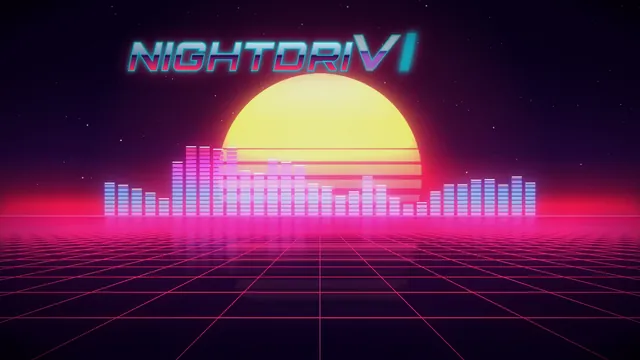 Rendered video
Claude Opus 5.5
Claude Code 2.1.280
skills on · Claude Code 2.1.280 + Remotion/HyperFrames skills
Rendered video from the run
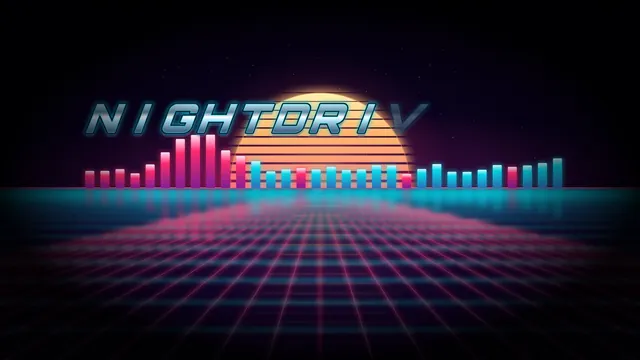 Rendered video
GPT-6 Sol
Codex CLI 0.156.1
skills on · Codex CLI 0.156.1 + Remotion/HyperFrames skills
Rendered video from the run