GPT-6 Sol in Codex CLI 0.156.1 + Remotion/HyperFrames skills
skills on · Codex CLI 0.156.1 + Remotion/HyperFrames skillsKit: remotion 4.0.532 · 3 of 12 installed skills used in the session
Rendered video (by the agent)
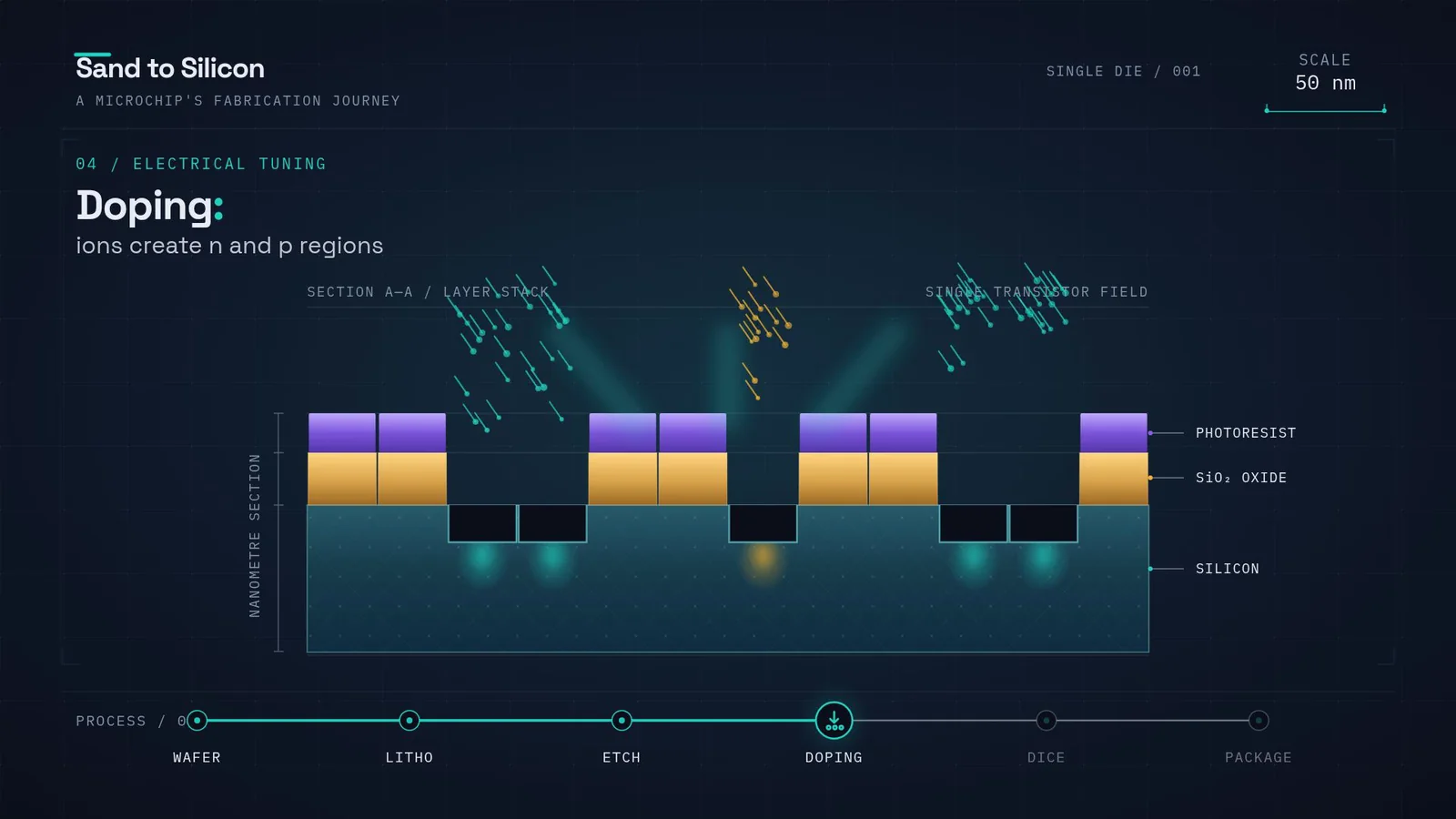
Rendered video (by the agent). This is the finished MP4 saved in the run. Played from a 720p web copy made by this site from the agent's out.mp4; the original file is too large for this host and is kept unchanged on the runs branch. Download video (1.8 MB).
Wall time 11m 32sCost $1.77 estimated
Review
No verdict yet.
The full review
OK. Finished on its own after 11.5 min.
Scores
AI judge
Not scored
No rubric for this prompt
Visitor votes and reviewer grades are not available yet.
- AI judge
- AI judge: the test runner (model claude-opus-5-5), scoring by visual review of the 1600 px render against the pre-registered rubric. No AI-judge score exists for this result: there is no rubric for this prompt, so no score is shown and none is made up.
- Visitors
- Public voting with a blind reveal is coming: you score the output first, then see the other scores.
- Reviewer
- The reviewer's own grade appears here once it is added.
Scores compare results for the same prompt only. AI-judge boards rank runs within one prompt, equal totals sharing a rank; scores from different prompts are never averaged.
Downloads
Files actually published for this run. Original output, site-made previews and post-run conversions are labelled separately.
The exact prompt
as run, 3,602 characters. Every result for this prompt
[Task]
Create a 30-second explainer video, 1920x1080 at 30 fps, that follows one microchip through fabrication. Each stage is an animated cutaway diagram with clean labels, and a persistent progress rail tracks the journey.

[Scenes]
1. 0-4 s: A glowing silicon ingot rotates in 3/4 view. A wire saw slices it, and one wafer tips toward camera, filling the frame with an iridescent mirror surface. The title "Sand to Silicon" sets in, then shrinks into the top-left. The progress rail draws itself along the bottom with six nodes.
2. 4-9 s: Photolithography. The camera dives into a magnified cross-section with substrate, oxide and photoresist layers. A UV light cone passes through a mask pattern, and exposed resist cells light up and dissolve away. Label: "Photolithography: pattern transferred with light".
3. 9-14 s: Etching. A plasma glow sweeps across the cutaway, and unprotected oxide recedes cell by cell into crisp trenches. Particle ions rain down in angled streaks. Label: "Etching: carving the pattern".
4. 14-19 s: Doping. An ion beam fires dopant dots that embed in the trench floors. A heat shimmer diffuses them into soft gradient wells marked n and p. A transistor outline traces itself over the wells.
5. 19-24 s: Dicing. The camera pulls back out to the full wafer, now tiled with hundreds of tiny dies. A diamond blade scores a grid with sparks, and one die lifts free and spins toward camera.
6. 24-30 s: Packaging. Gold bond wires arc from die to lead frame, an epoxy shell folds closed, and pins bend down. The finished chip lands on a circuit-trace background that pulses with light. All six rail nodes glow, and the end card reads "Six steps. Billions of transistors."

[Style]
Palette: #0B0F1A (deep navy), #1FD1C1 (cyan), #F2B134 (gold), #E8ECF4 (paper white), #8A5CF6 (UV violet). Type is a precise geometric sans with monospaced micro-labels. The lighting is a clean-room glow with soft bloom on light sources and thin hairline leader lines. Motion uses ease-in-out cubic for camera moves, gentle springs for labels popping in, and a 40 ms stagger for repeated cells.

[Wow]
- Continuous zoom: the camera travels from wafer scale to nanometre cutaway and back without a break, with the scale bar re-labelling live (mm, then µm, then nm).
- Thin-film interference shimmer on the wafer surface that shifts with camera angle.
- Ion and plasma particle systems, seeded and directional, that interact with the layer geometry.
- The progress rail morphs its active node into each scene's key icon.

[Rules]
- Every frame is drawn in code (SVG, canvas, CSS or WebGL). No image files, no image generation, no external assets beyond fonts.
- Deterministic: no unseeded randomness at render time.
- Text must be crisp, spelled correctly and readable at 1080p.
- No hard cuts between scenes: every change is a designed transition.
- Cross-section layers keep consistent colours across all scenes so viewers can track each material.

[Harness notes] Render the final video to out.mp4 (1920x1080, 30 s). Write everything into the working directory. Remotion 4.0.527 is already installed for you in the current directory: node_modules is pre-installed and read-only, so do not run npm install or create-video, and a remotion.config.ts here already points rendering at the local Chromium. Render the final video yourself to out.mp4 in the current directory (for example npx remotion render <entry file> <composition id> out.mp4). You may render stills or frames and inspect your own output (headless chromium is available at /usr/bin/chromium) and iterate on your own before finishing.
How it was made

Step by step
The prompt, every agent turn and tool call (tool name and a one-line summary; inputs and outputs are not shown), then the final message. The full transcript is 21.2 MB; it is published as a scrubbed, compressed download rather than shown on the page.
Show all 95 steps
Loading the timeline…
Download the full transcript Codex CLI rollout JSONL, 130 KB, gzip. Scrubbed: anything that looks like a key, token, e-mail address or phone number is replaced, and account details and the test machine's file paths are removed.
Cost breakdown
Headline cost $1.77, estimated from the token counts at list price.
| Tokens by type | Tokens | $ per 1M | Cost |
|---|---|---|---|
| Input (uncached) | 232 | $2.00 | $0.0005 |
| Cache write | 133,750 | $2.00 | $0.2675 |
| Cache read | 4,606,567 | $0.20 | $0.9213 |
| Output | 58,563 | $10.00 | $0.5856 |
| of which reasoning | 25,427 | billed as output |
- Total computed from tokens
- $1.7749
- Total reported by the harness
- none
Computed from harness-reported token counts x list prices. Cache writes priced at the input rate (the price table has no separate cache-write price). No request above 272,000 input tokens (54 checked): standard rates.
Prices: Project price table, 2026-09-25.
Run notes
- frozen prompt (written): written 2026-10-03 for MR wave rh (owner ask m:d1f2d829 + m:1122fe24: more Remotion and HyperFrames, ambitious multi-scene, harness runs); concept 'chip_fabrication_journey' (shared by the Remotion and HyperFrames tests); all frames code-drawn; standard remotion harness suffix (30 s); zero results
- plain CODEX_HOME copy (config.toml and framework skills, run work/ trusted; no AGENTS.md/state)
- W2 remotion skills installed in this run's codex_home/skills
- W2: the framework's pinned node_modules is bound read-only at work/node_modules (the prompt's 'pre-installed and read-only'); Node 22.23.3 and work/node_modules/.bin first on PATH; headless Chromium /usr/bin/chromium
- Mode: interactive TUI in tmux (160x48), inside bubblewrap sandbox
- Isolation audit: outside paths seen