gpt-6.1-sol in a raw API call
raw API baseline
Zoom, inline player and more ways to view
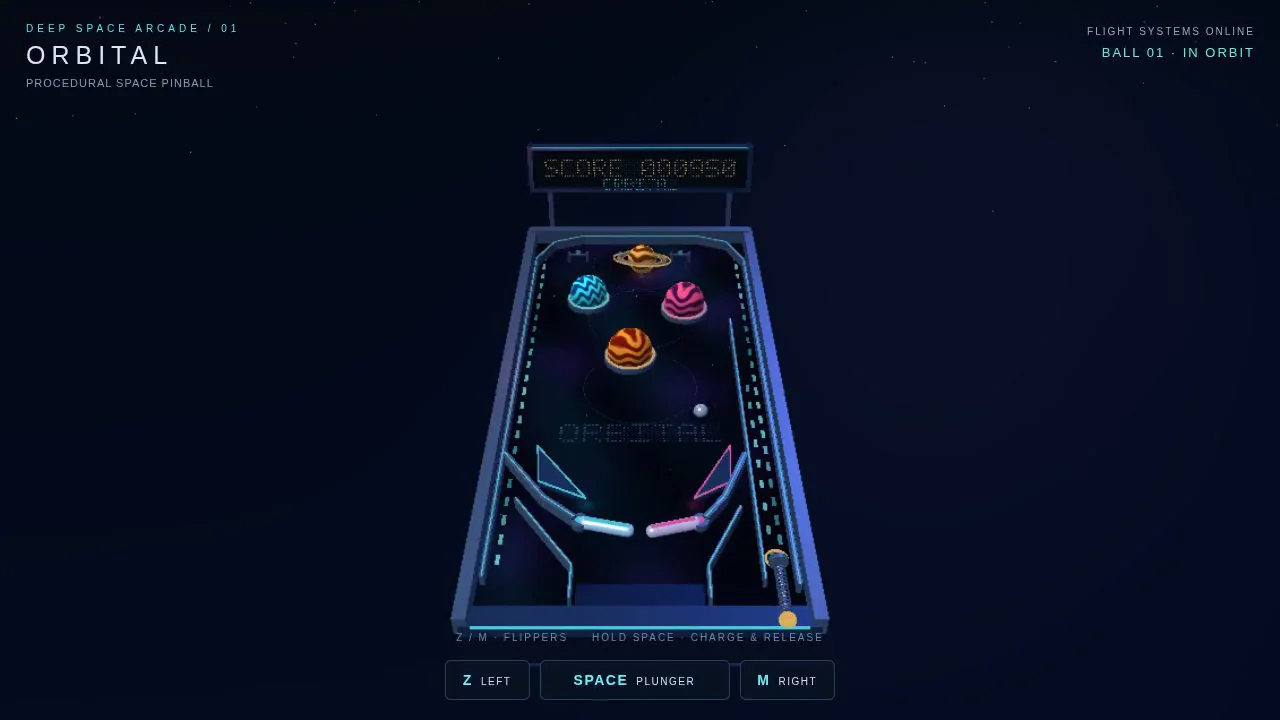
The model's own page, run in a sandboxed frame only when you ask (a page that needs its own origin opens in a new tab on a separate demo site). Phones get a full-screen player capped at 1.5x pixel density (2x on larger screens) so it stays smooth; the original page runs uncapped. It starts in its auto-tour (T switches to play mode on a keyboard).
Wall time 3m 05sCost not recorded: the run's token counts were never reported, so there is no estimate
Review
No verdict yet.
The full review
OK. finish=completed; ran in the capture with no console errors
Scores
AI judge
Not scored
No rubric for this prompt
Visitor votes and reviewer grades are not available yet.
- AI judge
- AI judge: the test runner (model claude-opus-5-5), scoring by visual review of the 1600 px render against the pre-registered rubric. No AI-judge score exists for this result: there is no rubric for this prompt, so no score is shown and none is made up.
- Visitors
- Public voting with a blind reveal is coming: you score the output first, then see the other scores.
- Reviewer
- The reviewer's own grade appears here once it is added.
Scores compare results for the same prompt only. AI-judge boards rank runs within one prompt, equal totals sharing a rank; scores from different prompts are never averaged.
Downloads
Files actually published for this run. Original output, site-made previews and post-run conversions are labelled separately.
The exact prompt
as run, 1,023 characters. Every result for this prompt
Build a Three.js scene: A full 3D pinball table themed as outer space, with planet-shaped bumpers, a ringed-Saturn spinner and LED-like emissive lane lights. The Z and M keys flip the left and right flippers, and Space pulls and releases the plunger with a held power charge. Bumpers flash and bounce the steel ball, the score shows on a floating dot-matrix panel, and the camera sits at a classic tilted player view. Everything is built in code from Three.js geometry, materials and shaders; no external models, textures or fonts. The scene must visibly animate from the moment it loads and run in a browser with software WebGL (no GPU). Deliver ONE self-contained HTML file; load Three.js only through an import map from https://cdn.jsdelivr.net/npm/three@0.170.0/build/three.module.js (addons from https://cdn.jsdelivr.net/npm/three@0.170.0/examples/jsm/), with no other external requests. Output ONLY the complete HTML file, starting with <!DOCTYPE html> and ending with </html>, with no explanation or markdown fences.
How it was made
No transcript was delivered with this result.
Cost breakdown
No cost figure: the run's tokens were never reported, so there is nothing to estimate from.
| Tokens by type | Tokens | $ per 1M | Cost |
|---|---|---|---|
| Input (uncached) | 239 | n/a | n/a |
| Cache write | not recorded | n/a | n/a |
| Cache read | not recorded | n/a | n/a |
| Output | 10,531 | n/a | n/a |
- Total computed from tokens
- unknown
- Total reported by the harness
- none
No list price for this model in the project price table (or no token counts).
Run notes
- Renderer: WebGL via three.js WebGLRenderer (three@0.170.0 loaded from the cdn.jsdelivr.net CDN through an import map plus three.js addons from the same CDN); text/HUD overlay in DOM+CSS. No local files.
- Card video: the row's own capture, re-encoded as H.264. Poster: a frame of that capture.
- Same frozen prompt as the other rows on this test; all rows are unscored, so this is not a head-to-head result.